Lofoten: Arctic Islands Floating in the Norwegian Sea
Lofoten is an Arctic archipelago floating in the Norwegian Sea, where sharp mountain peaks rise dramatically from deep blue waters. Bright red fishing villages line the fjords, and the Northern Lights dance across the winter sky. In summer, the sun never sets for 24 hours a day.
Lofoten is an Arctic archipelago floating in the Norwegian Sea, where sharp mountain peaks rise dramatically from deep blue waters. Bright red fishing villages line the fjords, and the Northern Lights dance across the winter sky. In summer, the sun never sets for 24 hours a day. This is not just a destination—it is a land shaped by nature over two million years through the forces of glaciers and Arctic winds.
The Meaning and Origin of the Word “Fjord”
“Fjord” originates from the Old Norse word fjǫrðr, which can be broken down as follows:
fjǫrðr → a body of water used for travel or crossing
It is related to the word ferð (journey) and the English word “fare”
It traces further back to the Proto-Indo-European root per- meaning “to cross” or “to pass”
Originally, the word did not simply describe a geographical feature, but rather a “place used for travel across water.” This reflects the lifestyle of the Norse people after the Ice Age, when water travel was the primary means of connection between communities. Thus, a fjord represents not only a geological formation but also the spirit of movement and connection among the ancient Viking people.
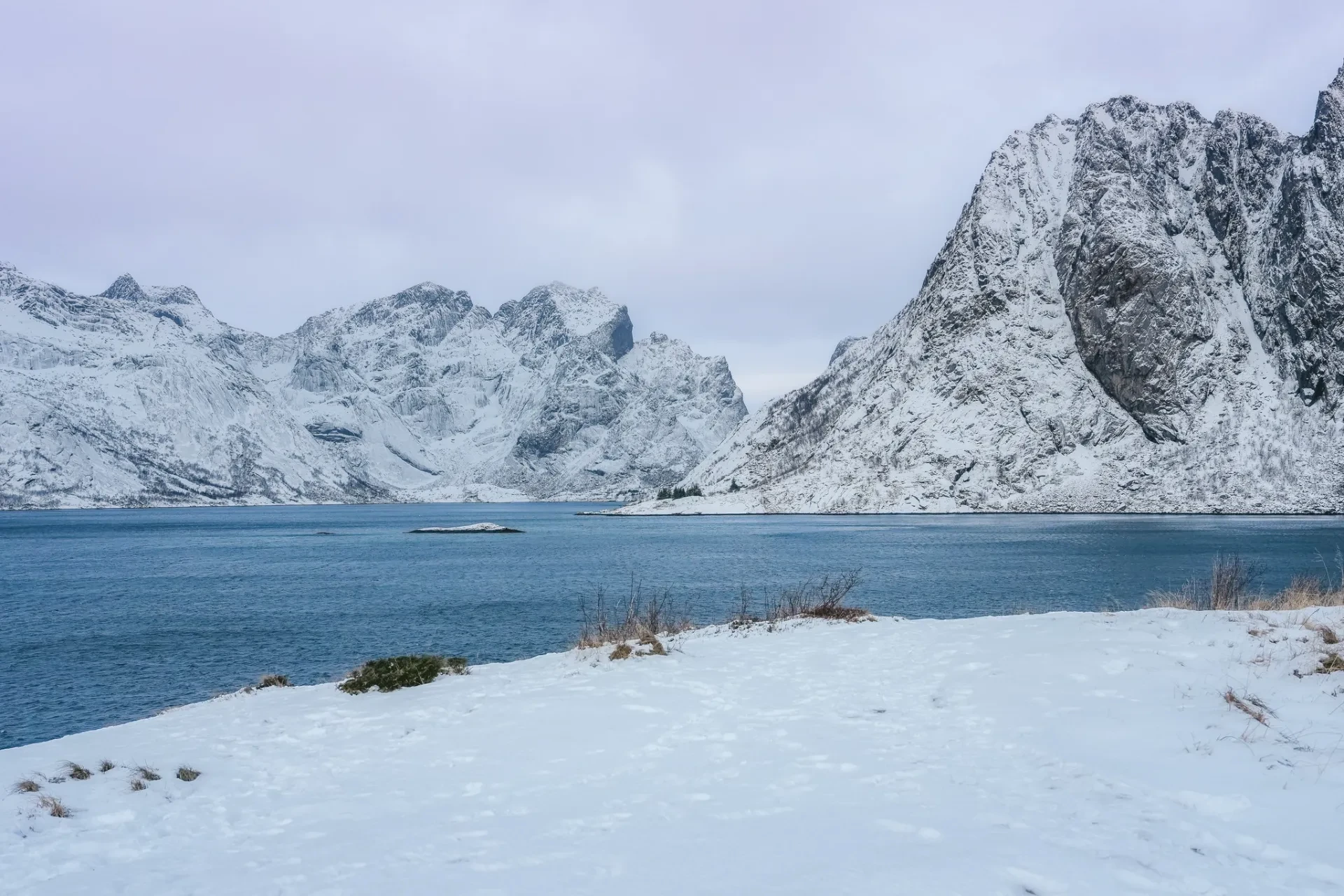
From a geological perspective, a fjord is a U-shaped valley submerged under the sea, formed by the erosion of massive glaciers during the Ice Age thousands of years ago. When the glaciers melted, seawater filled the carved valleys, creating long, narrow inlets surrounded by steep cliffs. The mouth of a fjord is often shallow due to gravel and sediment deposited by glaciers, making the water inside calmer than the open sea—like a natural harbor shaped by nature itself.
The word “fjord” is one of the few English words borrowed directly from Norwegian, and it is the only English word that begins with the letters “fj.”
Lofoten: An Archipelago Within Fjords
Lofoten is an island group in northern Norway, located above the Arctic Circle, about 1,300 km north of Oslo. It consists of five main islands: Austvågøya, Gimsøya, Vestvågøya, Flakstadøya, and Moskenesøya. These islands are connected by bridges and coastal roads stretching about 110 km from north to south, yet they are filled with landscapes often described as “the most beautiful islands in the world.”
Mountains That Kiss the Sea
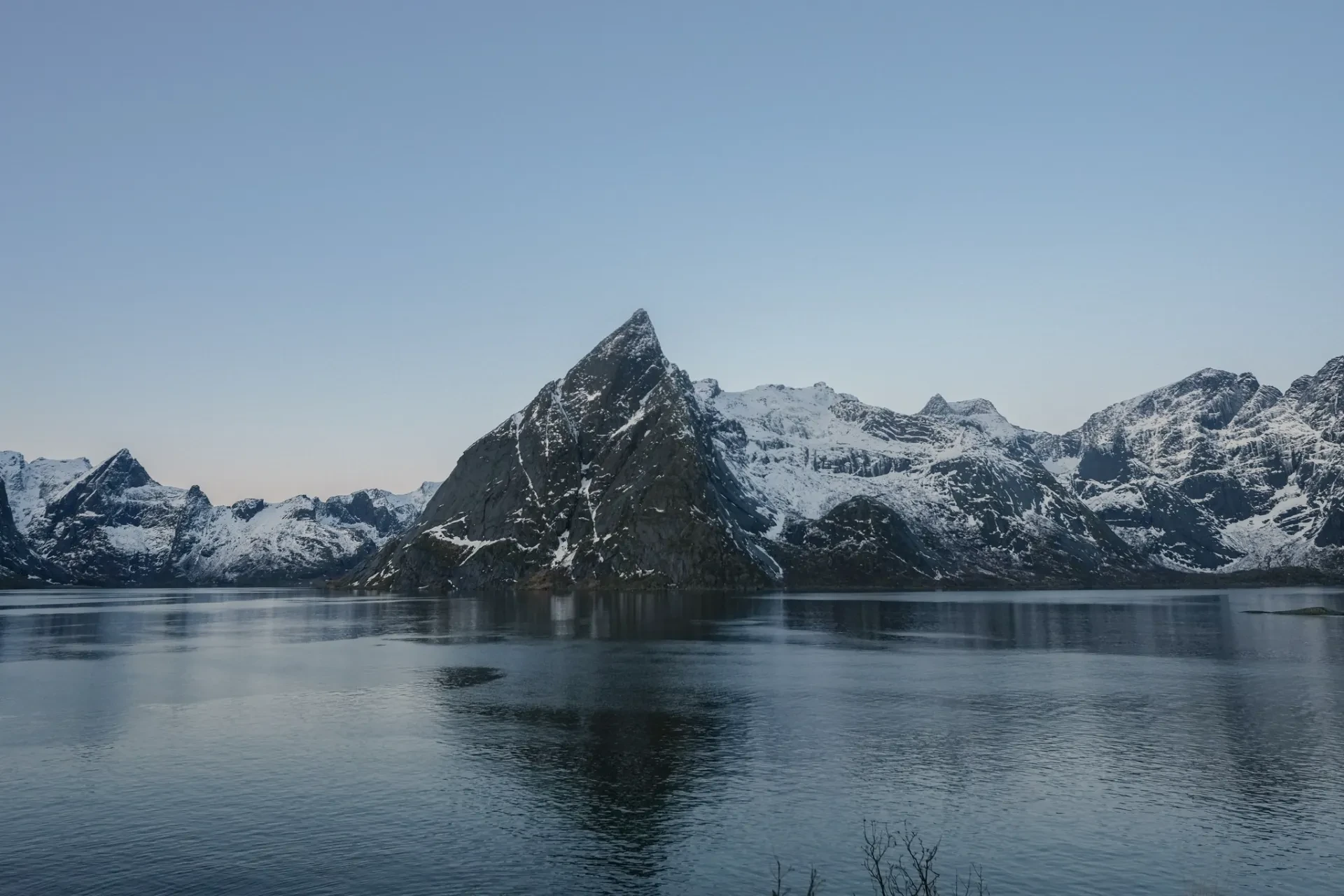
What makes Lofoten unique is its dramatic geography: ancient granite mountains, over 3 billion years old, rise directly from the sea with no flat land in between. Jagged peaks stretch like dragon teeth along the coastline, alternating with deep fjords that carve into the land, creating a scene that looks like a living oil painting.
Fishing Villages Frozen in Time
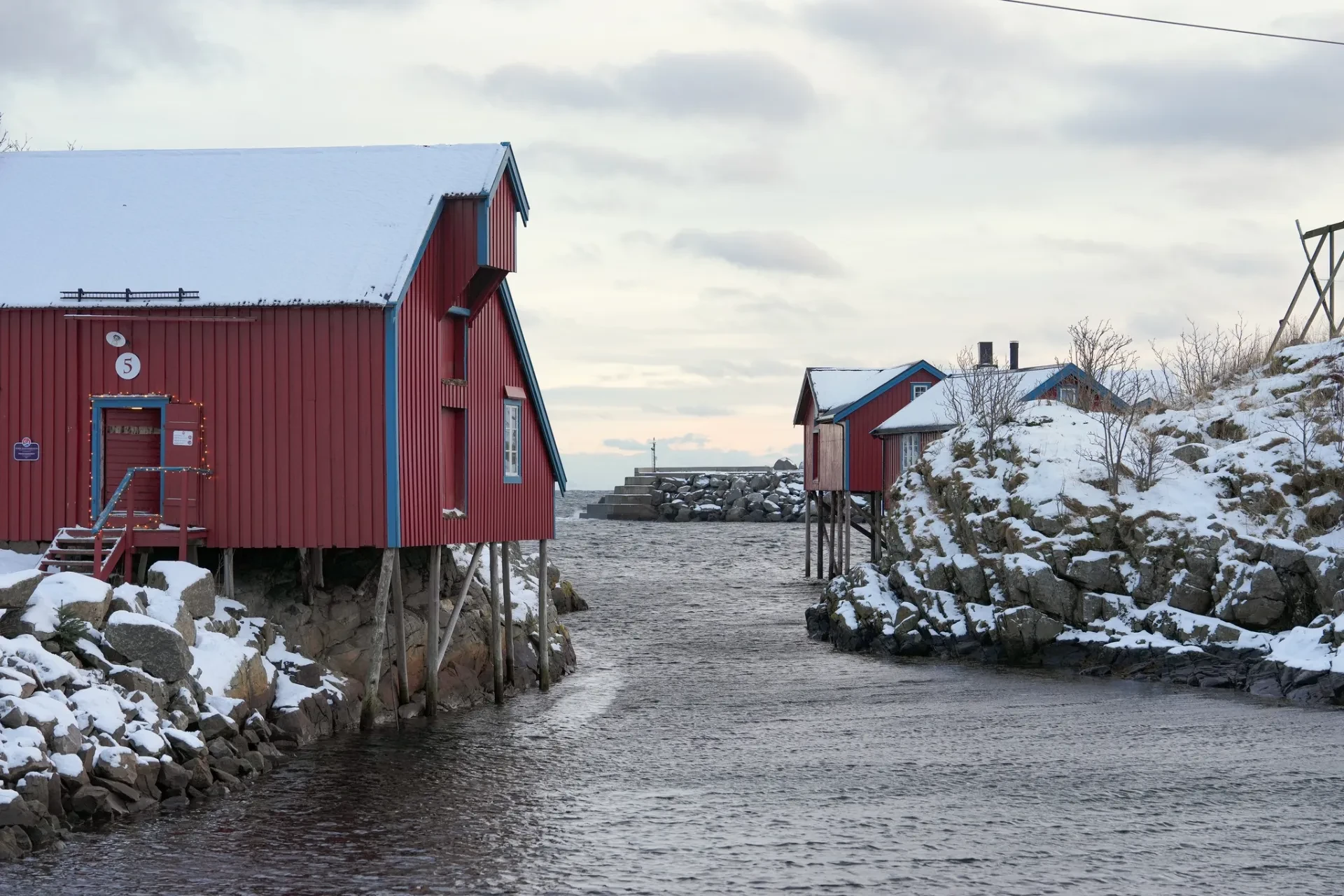
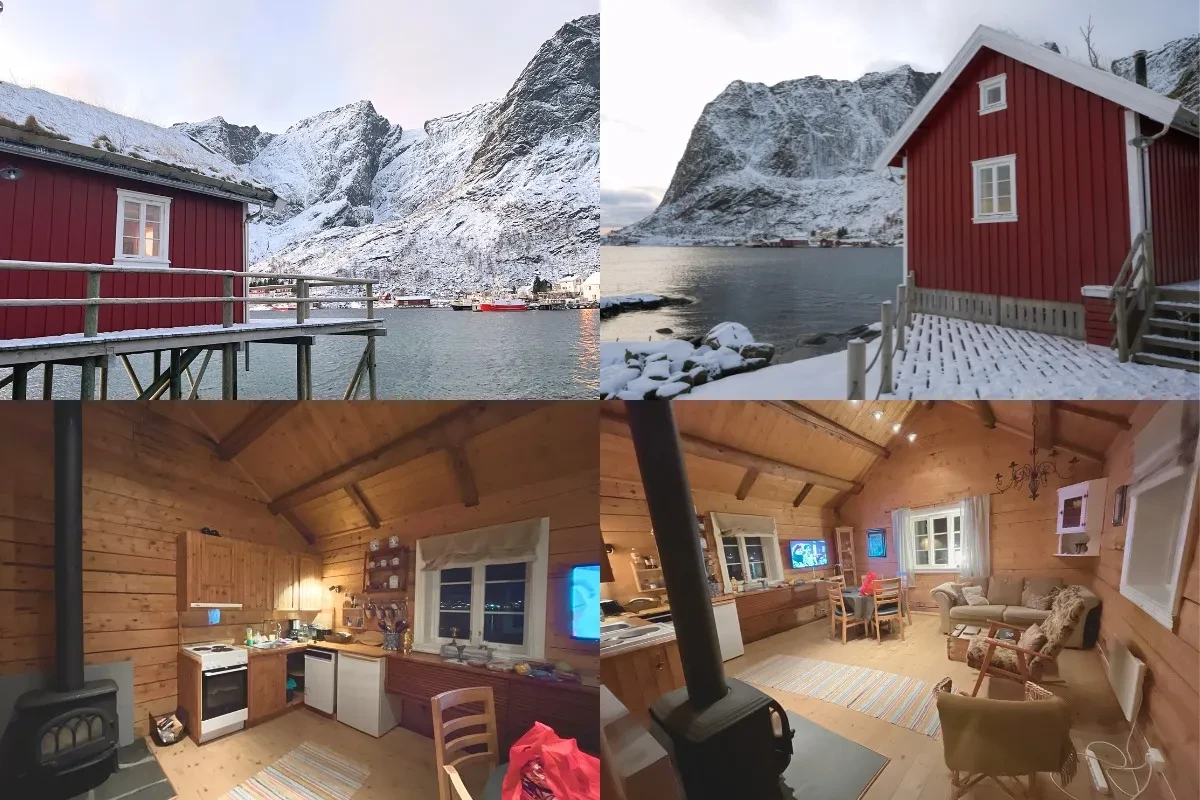
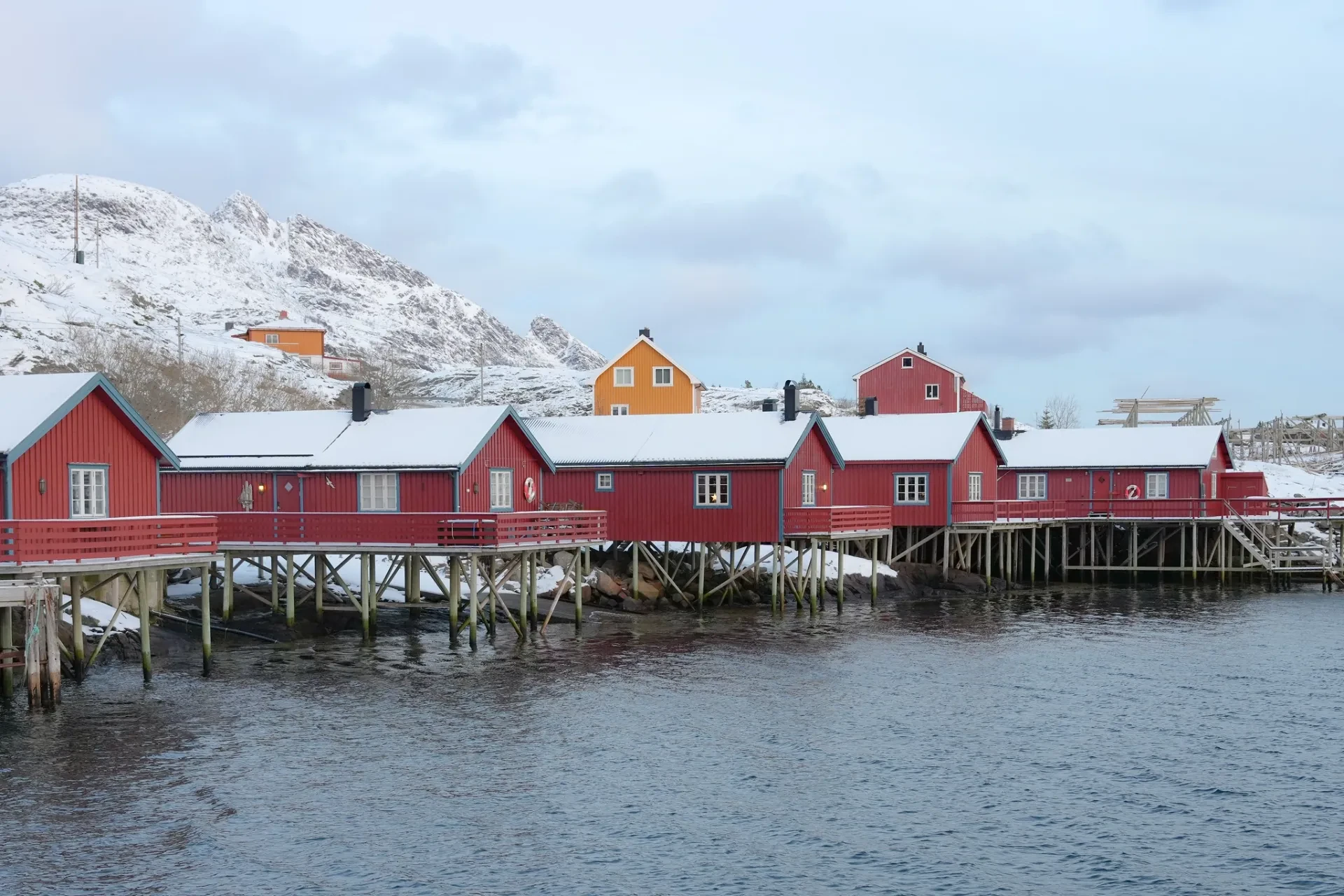
Lofoten is the world’s largest producer of “stockfish” (dried cod). The fishing culture here dates back to the Viking Age. One of its iconic symbols is the “rorbuer,” bright red wooden cabins built on stilts over the water. Originally used as seasonal housing for fishermen, many have now been converted into tourist accommodations, offering the experience of sleeping above the sea.
From February to June, locals dry cod fish on large wooden racks called “hjell.” Tens of thousands of fish hang in the cold Arctic air, preserved by traditional methods passed down through generations—creating one of the most distinctive cultural landscapes in the region.
Fjords and Must-Visit Destinations in Lofoten
Reine and Hamnøy – Fishing Villages Between Mountains and Fjords
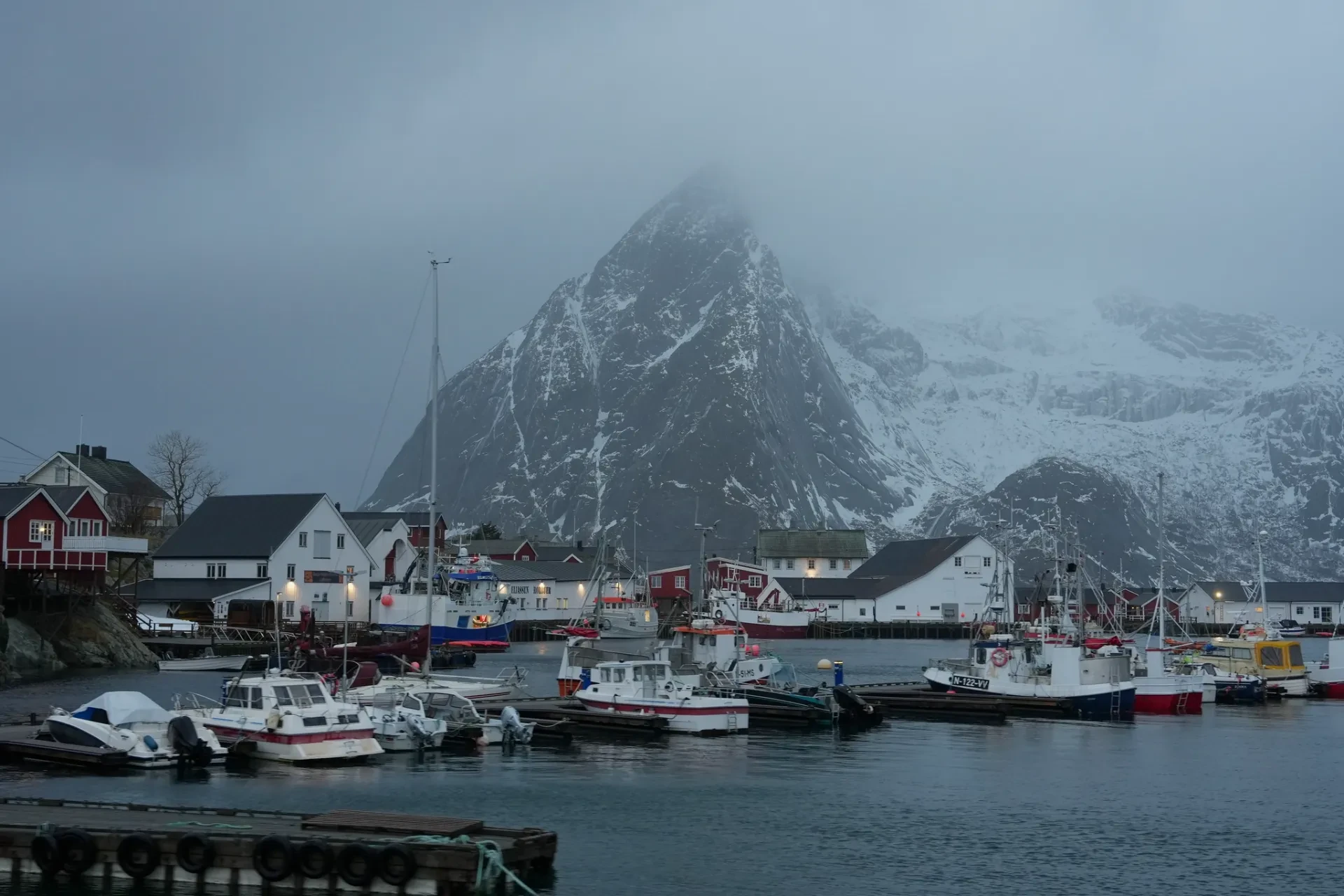
Reine and Hamnøy are located on Moskenesøya and are among the most iconic postcard views of Lofoten. Red rorbuer cabins line the fjord, surrounded by sharp mountain peaks rising from the water. The classic photo spot is the bridge between Hamnøy and Sakrisøy. Reine is also the starting point of the famous Reinebringen hike, built with stone steps by Nepalese Sherpas, offering panoramic views of the fjord landscape.
Å – The Village at the End of the Road
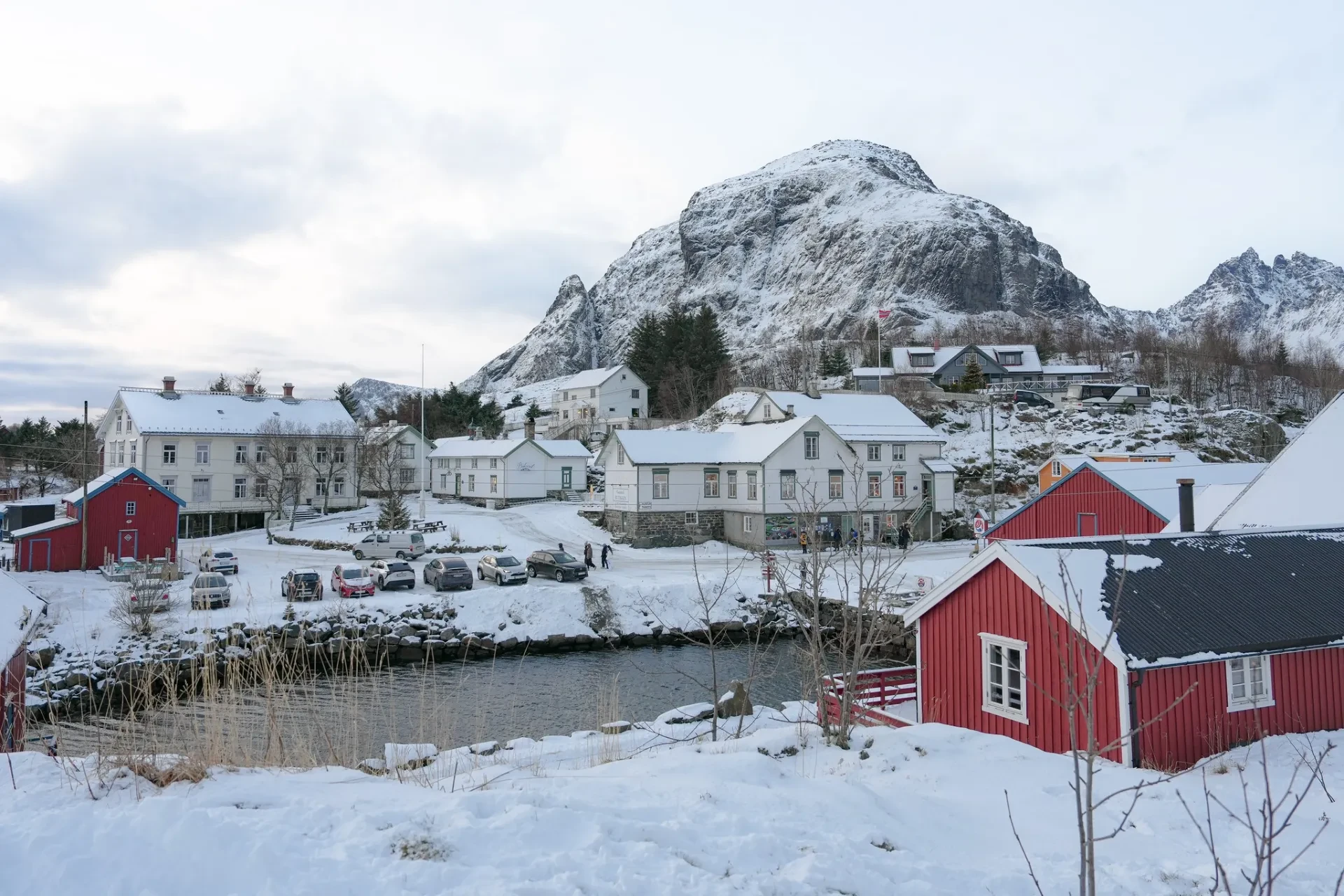
Å is the last village at the end of the E10 highway. Its name is the shortest place name in the world and means “river” in Old Norse. It preserves traditional fishing village life and is home to museums dedicated to fishing and stockfish, offering a glimpse into Lofoten’s history.
Sakrisøy – The Yellow Village
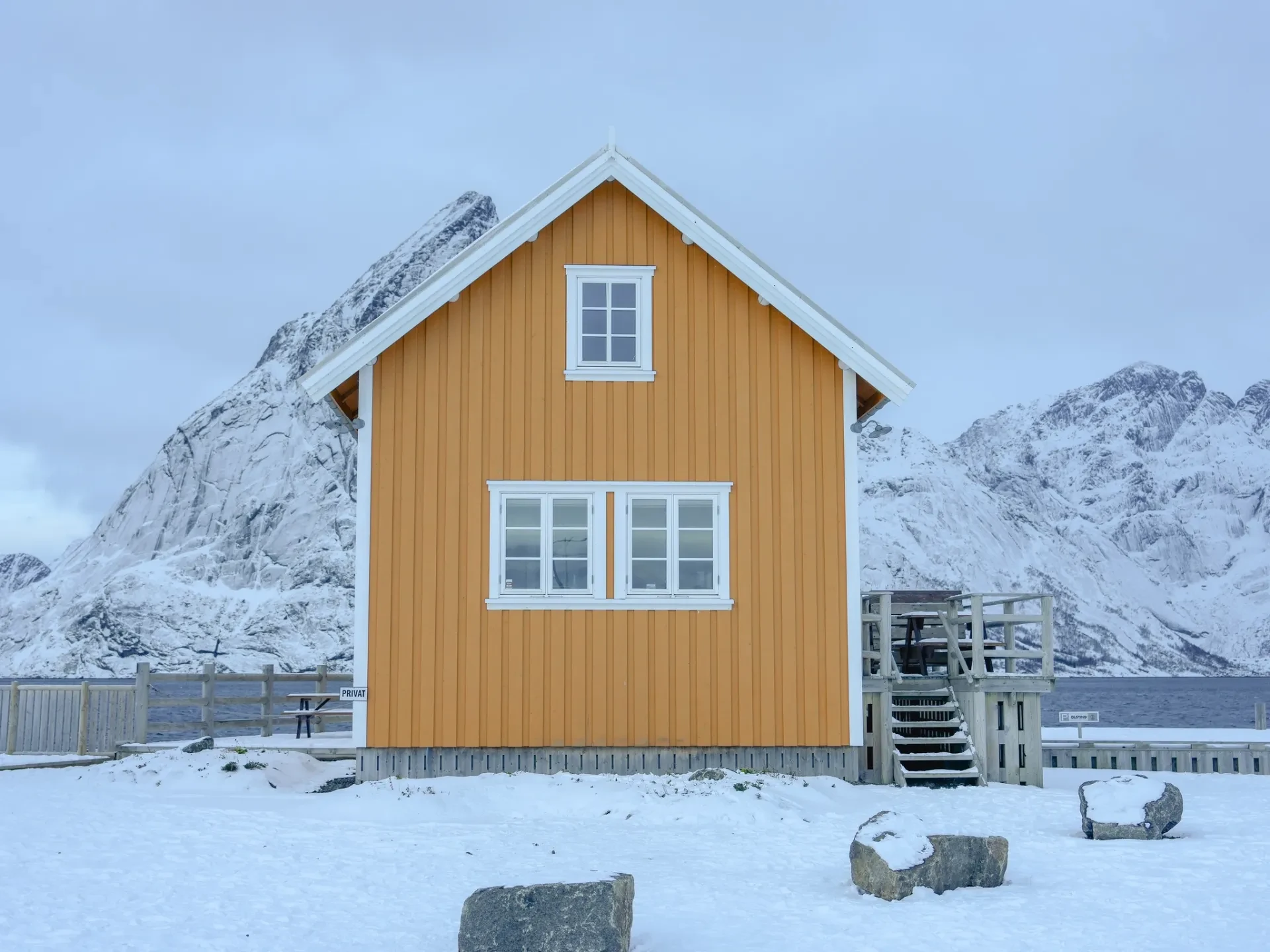
Sakrisøy is a small island between Reine and Hamnøy, famous for its bright yellow cabins contrasted against the pointed Olstind mountain. It is one of the most photographed scenes in Lofoten.
Ramberg Beach and Skagsanden Beach
Ramberg Beach features white sand and turquoise water surrounded by snowy mountains, creating a surreal contrast between Arctic and tropical landscapes.
Skagsanden Beach is known for its wide tidal flats that reflect mountains and sky like a mirror, making it a favorite spot for photographers and surfers alike.
Henningsvær – The Venice of Lofoten
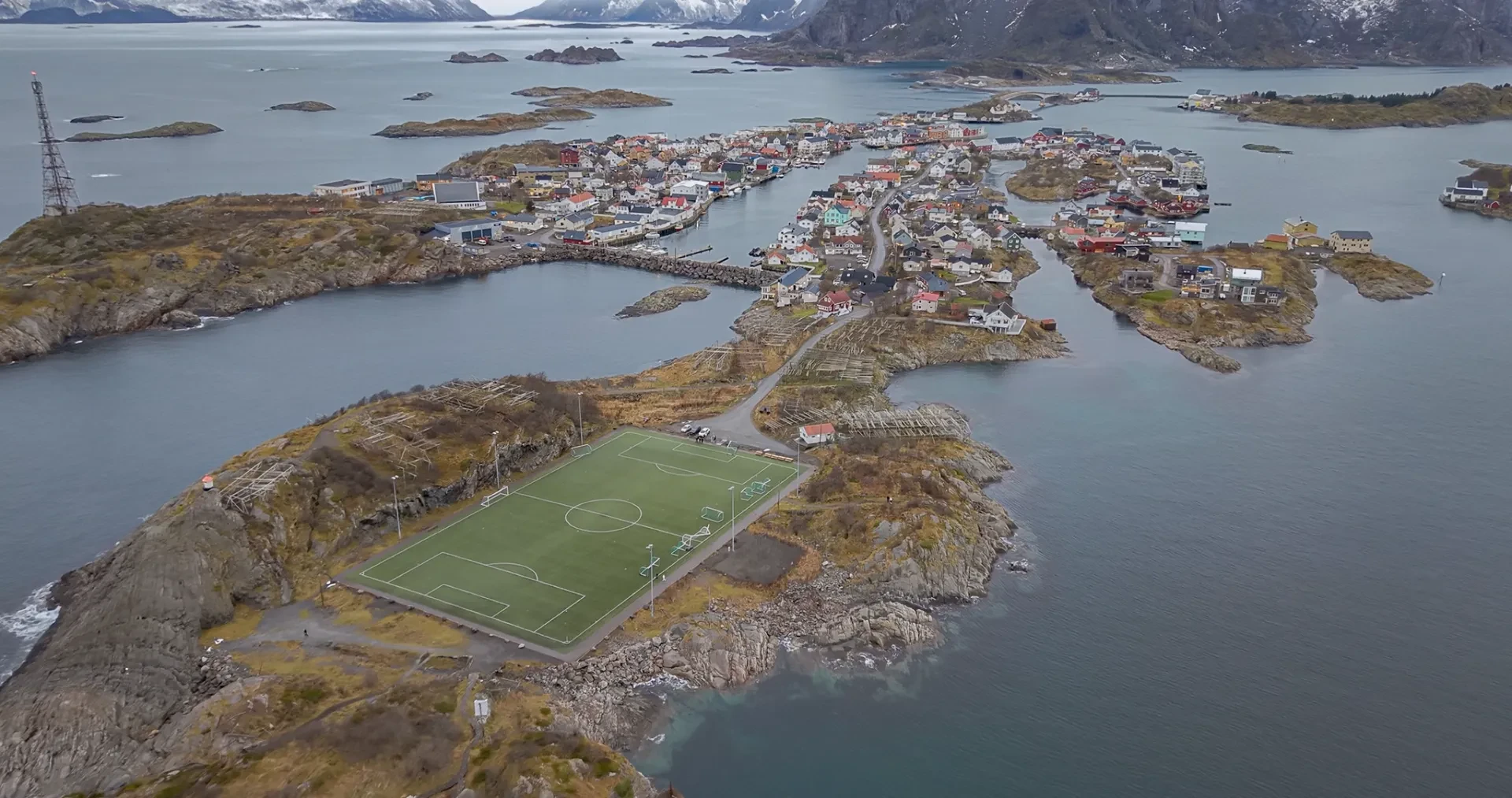
Henningsvær is a fishing village spread across small islands connected by bridges. With cafés, galleries, and shops, it has a vibrant cultural atmosphere. Its most famous landmark is the Henningsvær Stadium, a football field located on a rocky island surrounded by the sea and mountains, often regarded as one of the most beautiful stadiums in the world.
Rørvikstranda Beach
Rørvikstranda is a quiet white-sand beach with turquoise waters and mountain views, perfect for a peaceful stop along the road.
Northern Lights in Lofoten
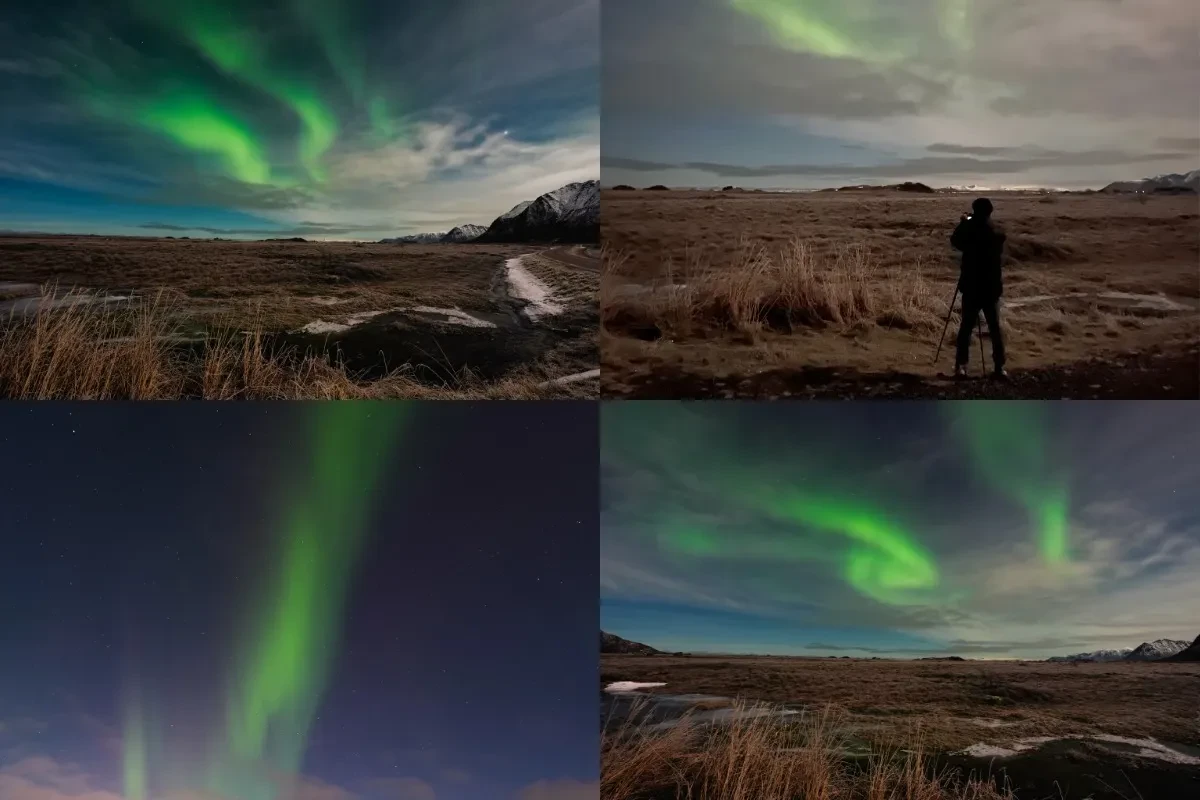
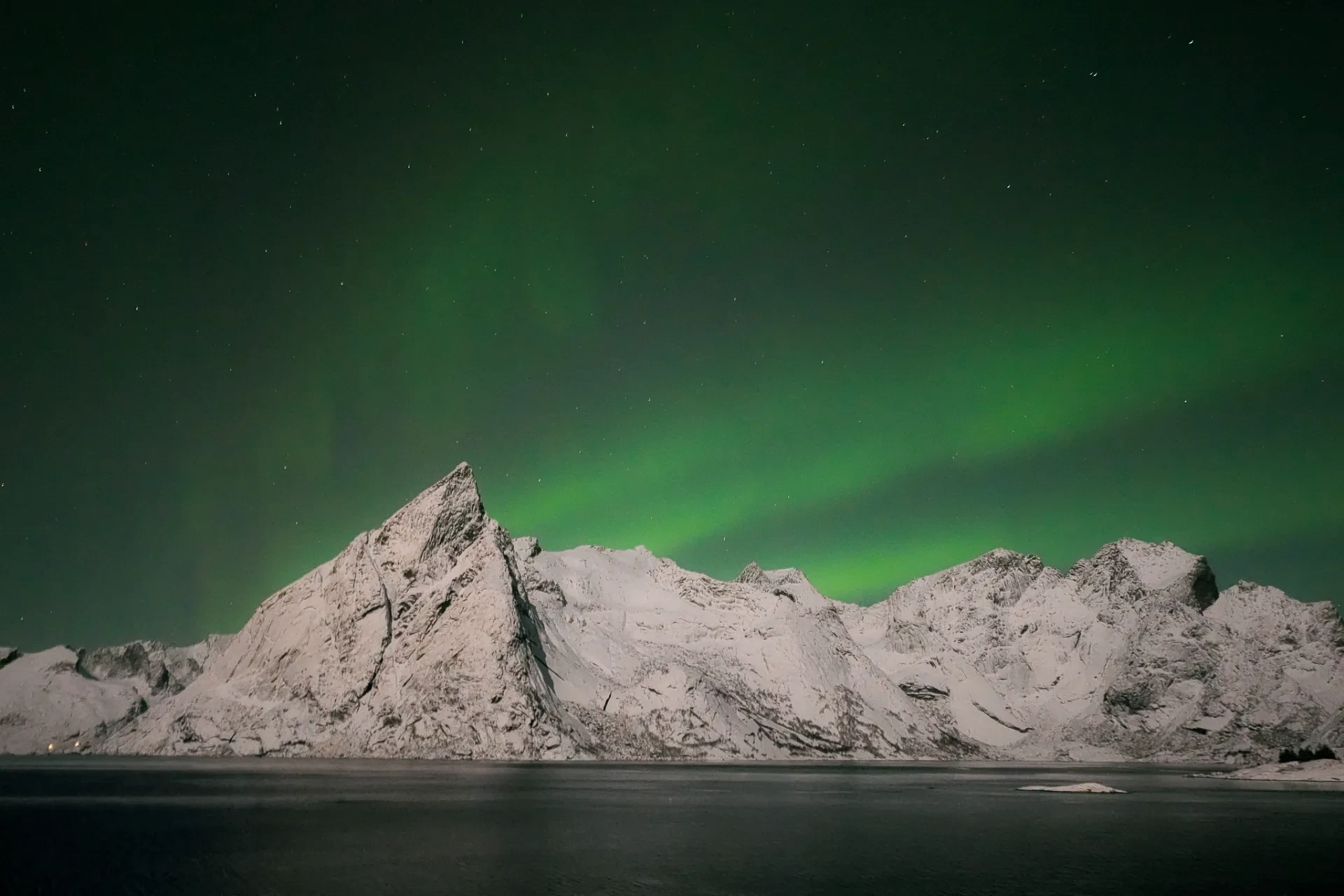
Lofoten is one of the best places in the world to observe the Northern Lights due to its Arctic location and low light pollution.
Reine: reflections of auroras on still fjord waters
Gimsøya: open landscapes ideal for wide sky views
Svolvær area: auroras above mountain peaks and fjords
Natural Phenomena
Aurora Borealis (Northern Lights)
From September to April, green and purple lights dance across the sky above snowy peaks and calm fjords, creating a magical atmosphere.
Midnight Sun
From late May to mid-July, the sun never sets. This phenomenon allows activities like hiking, fishing, and kayaking at any hour under golden daylight.
Travel and Best Time to Visit
How to Get There
By air: Oslo → Bodø → Leknes/Svolvær, or Harstad/Narvik
By ferry: Bodø → Moskenes (3–4 hours)
Around the islands: renting a car is the best option
In a world connected by the internet and cheap flights, truly remote places are becoming rare. Lofoten remains one of them. Here you will find:
Fjords shaped by ancient glaciers over millions of years
Living fishing villages with Viking heritage
Seasonal natural phenomena like auroras and midnight sun
Rare silence and untouched landscapes
Lofoten teaches us that true beauty does not need to be modified or created—it simply exists in nature. We only need to pause and witness it with humility.